Your Biggest Customer Isn’t Always Your Most Profitable


Executive Brief
“We’ve never been busier.”
The calendar is full. Your crews are booked weeks in advance. The phones keep ringing. Trucks are leaving the yard before sunrise, and everyone seems to be moving at full speed.
From the outside, it looks exactly like success.
Yet many owners eventually find themselves asking:
“If we’re this busy… why aren’t we making more money?”
The answer often isn’t a lack of work. It’s the type of work.
Because your biggest customer isn’t always your best customer.
I enjoy talking with business owners because they know their businesses inside and out. They can tell you who keeps their crews busy, who pays on time, and who has been with them for years.
What they often haven’t had the opportunity to see is the financial story behind those relationships.
Sometimes the customer everyone loves is also one of the least profitable.
Sometimes the quiet, dependable customer nobody talks about is the one helping build a healthier business.
That’s why looking beyond revenue can completely change how you view your business.
What a Full Calendar Doesn’t Tell You
A busy business and a profitable business aren’t always the same thing.
It’s easy to assume that a full schedule automatically leads to stronger profits. After all, more work should mean more money… right?
Not necessarily.
Some projects require significantly more labor, materials, supervision, equipment, communication, or follow-up than others. By the time they’re complete, that impressive revenue number may have produced only a modest profit.
Meanwhile, a smaller project with fewer complications may quietly generate a much healthier return.
That’s why successful owners eventually stop asking:
“How much work did we do?”
And begin asking:
“Which work created the most value?”

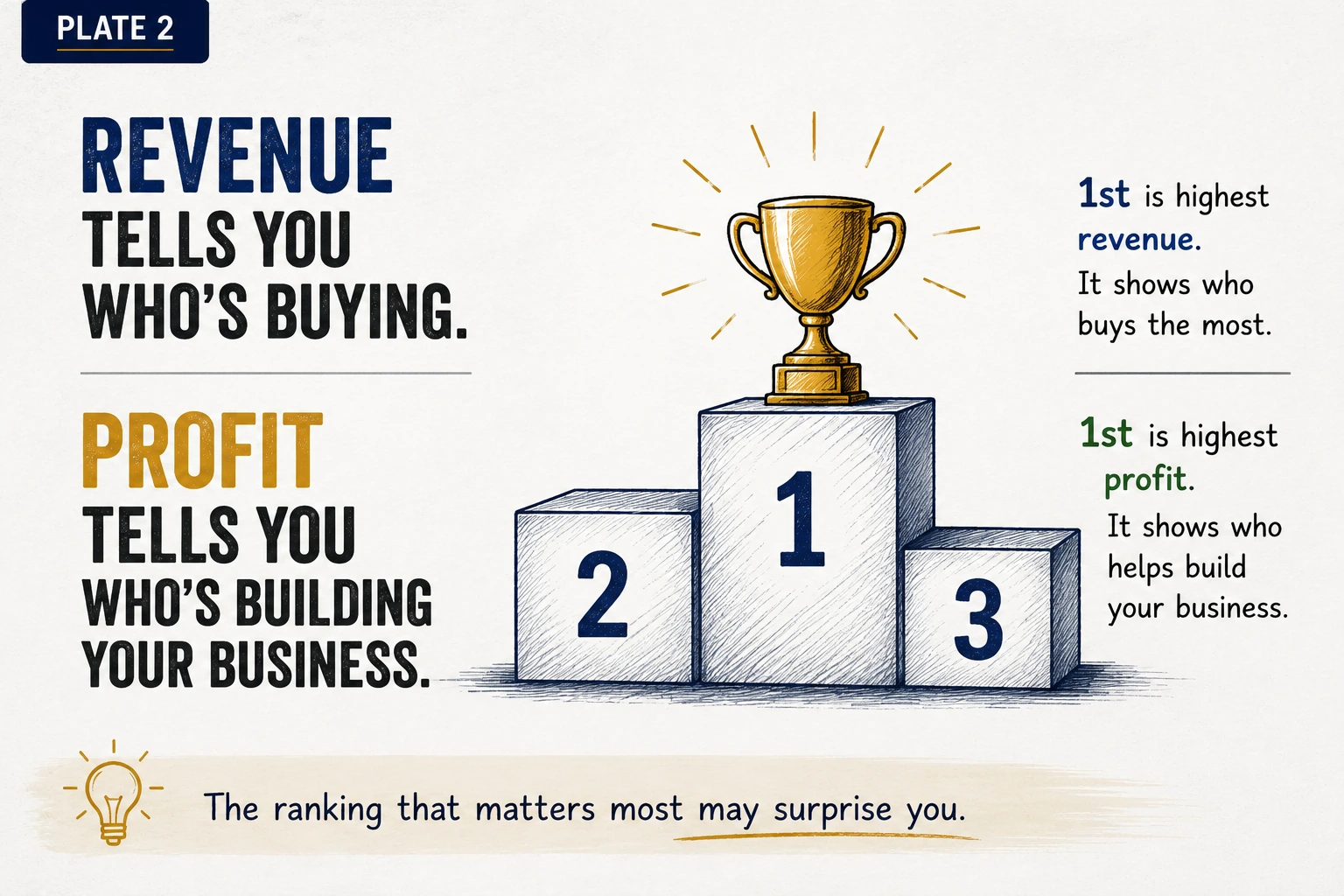
Looking Beyond Revenue
Once you realize that revenue doesn’t tell the whole story, the next question becomes:
“So what should I measure?”
That’s where two numbers can completely change how you evaluate your work: Gross Profit and Gross Margin.
Gross Profit is the dollar amount remaining after the direct cost of delivering the work.
Gross Margin is that same Gross Profit expressed as a percentage of revenue.
Gross Profit answers a simple question:
“After paying the labor, materials, subcontractors, and other direct costs, how many dollars did this job actually contribute to the business?”
Gross Margin answers a different question:
“How efficiently did this job produce that Gross Profit?”
Together, they help answer a far more important question than revenue ever could:
“Was this job actually worth doing?”
Where overhead fits: Gross Profit and Gross Margin measure performance after direct job costs, but before general business overhead.
The Gross Profit created by your customers and jobs must still help pay office payroll, rent, insurance, software, vehicles, utilities, marketing, and the other costs of operating the company.
A high-margin job is not the same as final Net Profit—but it gives the business more financial capacity to cover overhead and leave profit behind.
That is why customer and job Gross Profit are the best starting point for comparison. A deeper profitability review can then examine how each customer or service line contributes toward overhead without pretending every overhead dollar can be assigned with perfect precision.
Imagine two customers.
One generates substantial annual revenue but requires constant attention, frequent callbacks, and razor-thin margins.
Another generates less revenue but is efficient, pays promptly, and consistently produces healthy profits.
Which customer is really helping build your business?
The Work You Want More Of
Every business has certain customers, jobs, or services that quietly outperform the rest.
They may not generate the highest revenue. They may never become the topic of conversation during weekly meetings.
Yet month after month, they consistently create healthy profits with fewer headaches.
Those are the opportunities worth protecting—and often worth growing.
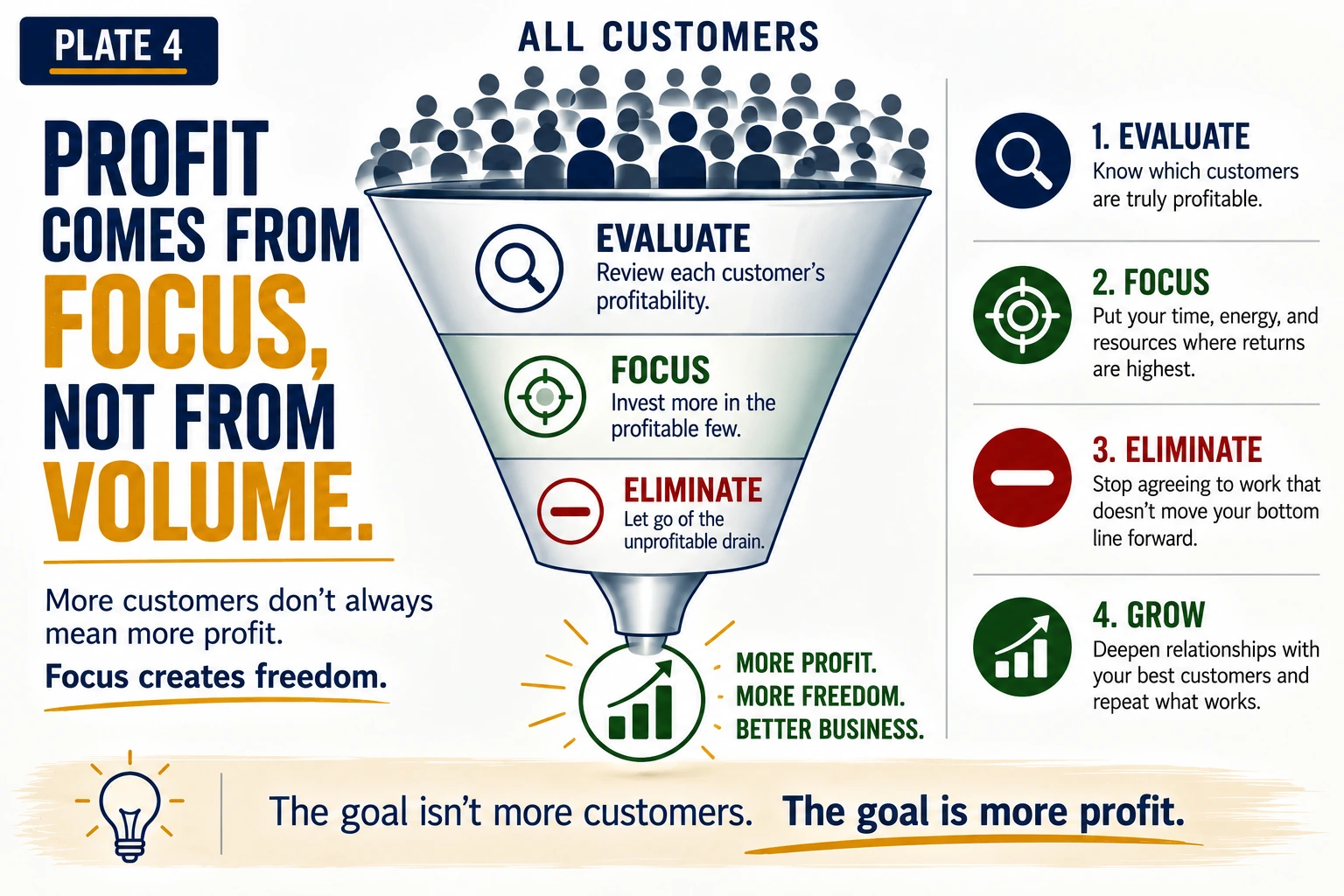
When Bigger Isn’t Better
Some of the busiest jobs in a business are also the least profitable.
They consume labor. Tie up equipment. Require constant communication. Create scheduling disruptions. Produce change orders, callbacks, or warranty work.
Yet because they generate impressive revenue, they often receive the most attention.
That’s why revenue can sometimes hide problems instead of revealing them.
A large customer may still be worth keeping. A low-margin service may support another valuable part of the business. A difficult job may have produced lessons that improve future work.
The point is not to make an immediate judgment based on one number.
The point is to finally see the full picture—and make the decision intentionally.
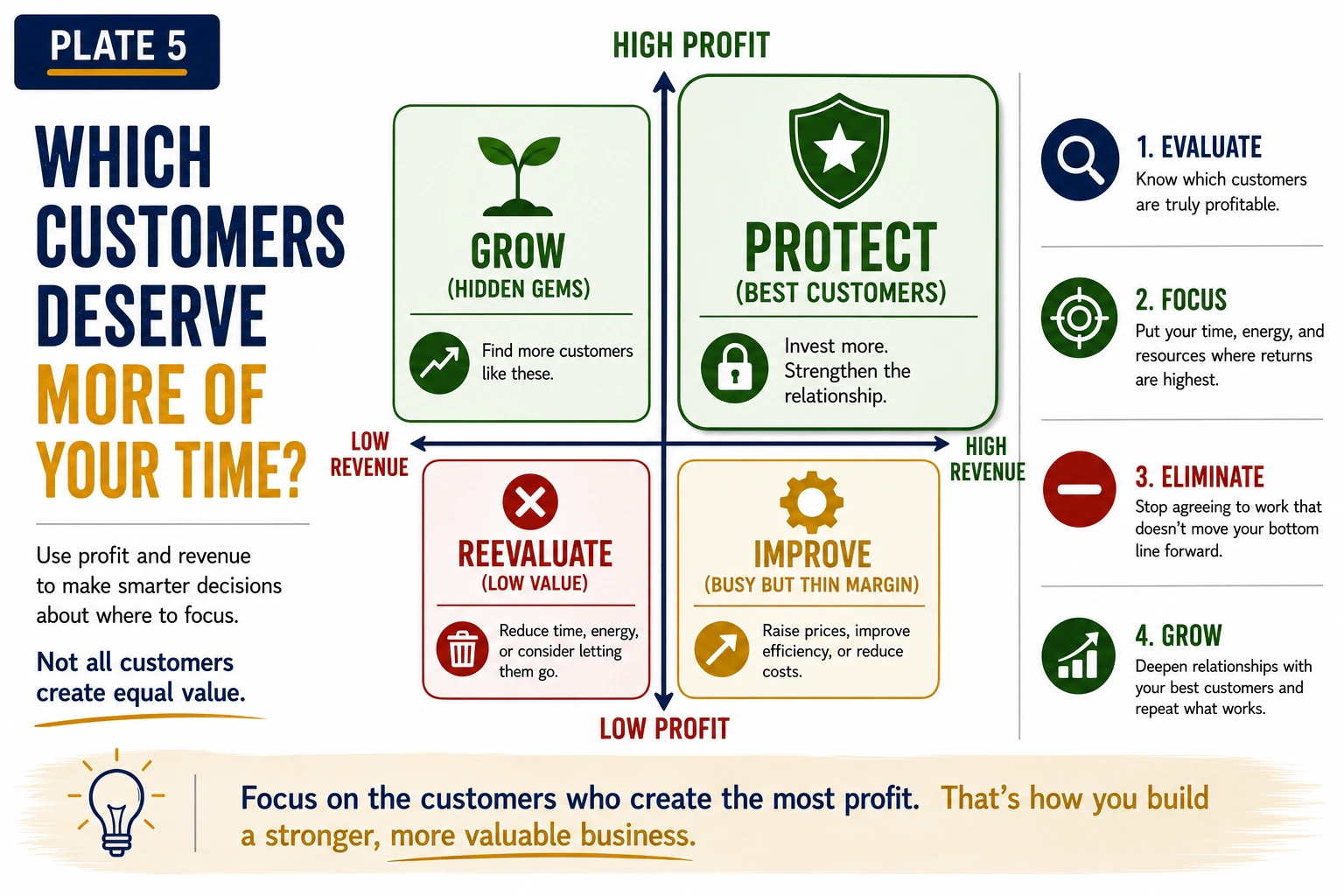
A Small Change in Perspective
Many owners naturally ask:
“How can we sell more?”
That’s an important question.
But try replacing it with another:
“How can we sell more of the work that’s already making us the most money?”
That small change in thinking can completely change the direction of a business.
The goal isn’t to do more work.
The goal is to do more of the right work.
Let the Numbers Tell the Rest of the Story
The strongest businesses don’t become successful by accepting every opportunity.
They become successful by understanding which opportunities create the greatest value—and intentionally pursuing more of them.
Revenue opens the door.
Profit determines whether walking through that door was worthwhile.
When you begin measuring the profitability of your customers, jobs, and services, you start making decisions that strengthen your business instead of simply keeping it busy.
Every customer has a story. Every job tells you something. Every service line leaves clues.
The numbers are already there.
The opportunity isn’t collecting more information. It’s learning to see what your business has been trying to tell you all along.
Find Out What Your Numbers Are Really Telling You
If you’re not sure which customers, jobs, or services generate the greatest profit for your business, you’re not alone.
Our Business Financial Health Assessment helps identify the financial patterns that matter most—so you can see where your business is creating value, where profit may be slipping away, and what deserves your attention next.
Until Next Wednesday
Keep asking better questions.
Your numbers already know the answers. You just need to know where to look.