How Does a Remote Bookkeeper or CFO Actually Work With Your Business?
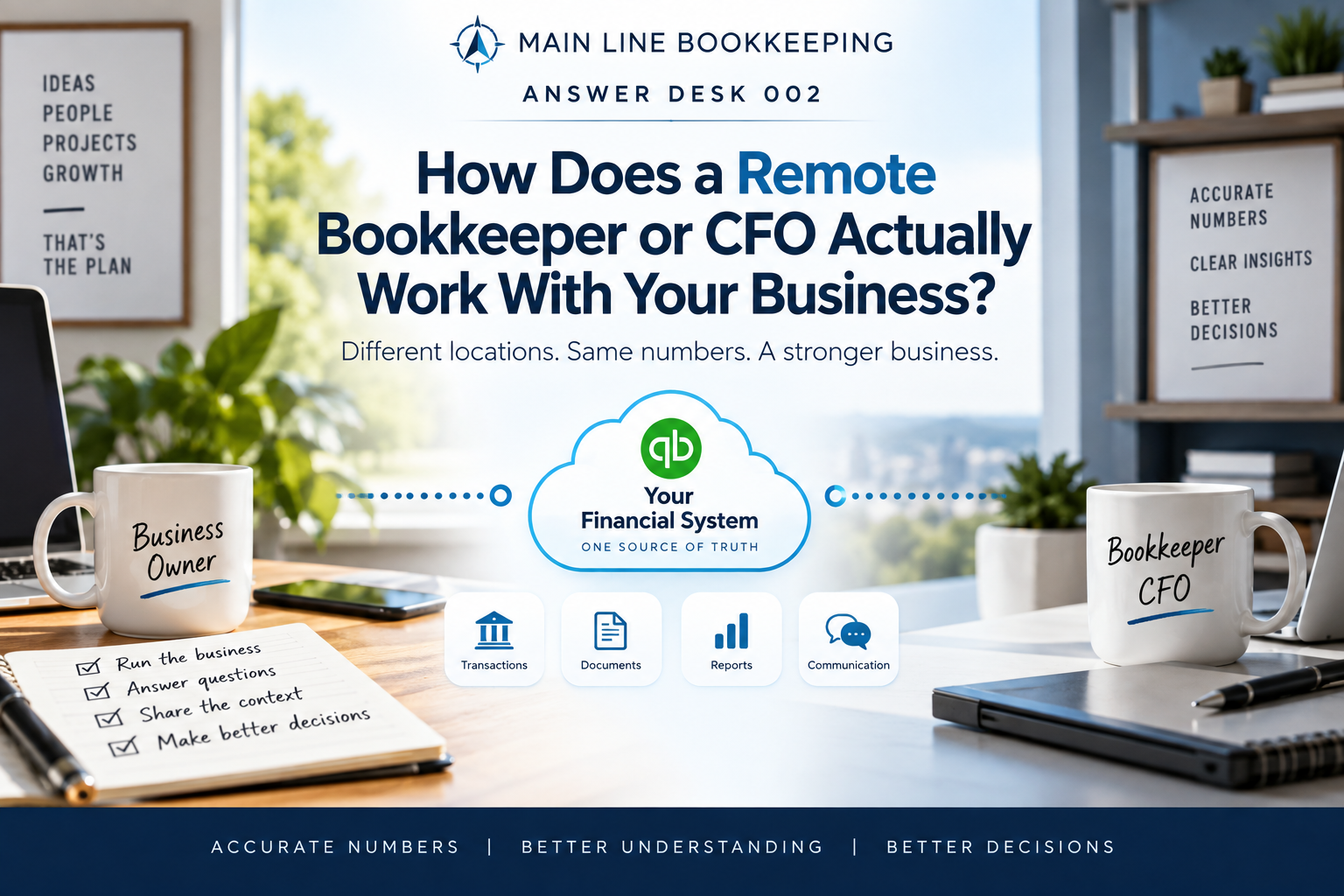
Distance doesn’t have to get in the way of good financial support. A remote bookkeeper or CFO works with your business through reliable access to financial information, a consistent process for exchanging documents and answering questions, and regular communication with the business owner.
The accounting system provides the numbers. The business owner provides the context.
Put those two together, and bookkeeping, financial reporting, cash-flow planning, forecasting, and CFO-level advisory work can all be performed effectively without everyone sitting in the same office.
How Does a Remote Bookkeeper or CFO Relationship Work?
Years ago, bookkeeping often meant boxes of paperwork, desktop accounting files, bank statements, and someone physically sitting at a desk in the company’s office.
Cloud accounting changed much of that.
With systems such as QuickBooks Online, a business can provide its accounting professional with appropriate access to the company’s books without requiring that person to work from the same location.
The owner and financial professional can therefore work from the same financial information even when they aren’t in the same building — or even the same state.
But the software is only part of the relationship.
A successful remote relationship needs a process.
Step 1: Learn the Business Before Trying to Advise It
Before worrying about monthly reports, a remote bookkeeper or CFO needs to understand how the business actually works.
That means learning things such as:
- How the company makes money.
- How customers are billed.
- How vendors and employees are paid.
- What the major expenses are.
- Whether the company tracks jobs, departments, locations, or service lines.
- What debt or financing exists.
- What financial information the owner needs to run the business.
For CFO advisory work, there’s another question that’s even more important:
What decisions is the owner trying to make?
Knowing that payroll was $80,000 last month is bookkeeping information.
Knowing that the owner is considering adding two employees next quarter — and determining whether the business can afford them — is CFO information.
Step 2: Create a Reliable Flow of Information
Once the relationship is established, financial information needs a predictable way to reach the bookkeeper or CFO.
Much of that information may already flow through QuickBooks, online banking, payroll systems, invoicing platforms, and other digital systems.
Other information may require documents, explanations, approvals, or answers from the owner or staff.
The objective isn’t to create more administrative work.
It’s to establish a simple routine so the financial professional isn’t spending every month hunting for information and the owner isn’t constantly wondering what needs to be sent.
A good remote relationship should eventually feel routine rather than remote.
Step 3: Keep the Books Current
This is where the bookkeeping foundation matters.
Transactions are reviewed and properly categorized. Accounts are reconciled. Unusual activity is investigated. Questions are resolved. Adjustments are made when appropriate, and the accounting period is brought to a reliable close.
At the end of that process, the goal isn’t merely to say:
“The bookkeeping is done.”
The goal is to produce financial information the owner can actually trust.
Step 4: Turn the Numbers Into Information
Once the books are accurate, the relationship can move beyond bookkeeping.
The Profit & Loss Statement might show that revenue increased.
Great.
But did gross profit increase with it?
Did payroll grow faster than revenue?
Are operating expenses creeping upward?
Is the company actually generating more cash?
Is one part of the business performing significantly better than another?
This is where reporting begins to turn into analysis.
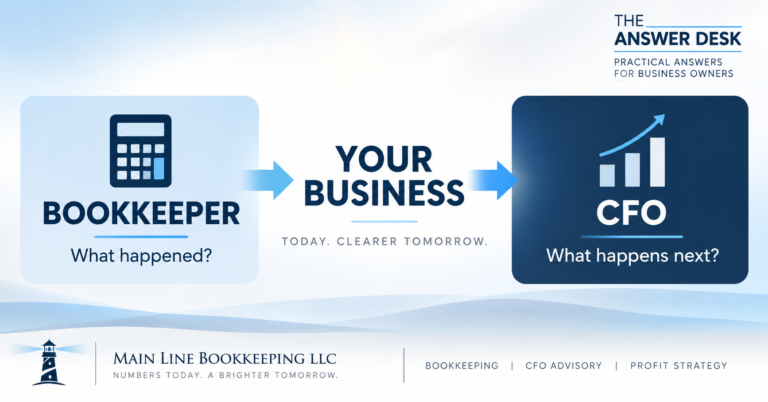
Bookkeeping tells you what happened.
CFO advisory helps you decide what happens next.
If you’re still determining which level of help your business needs, our Answer Desk article Should I Hire a Bookkeeper or a CFO for My Growing Business? walks through that decision.
Step 5: Talk About What the Numbers Can’t Tell Us
This may be the most important part of a remote CFO relationship.
QuickBooks can tell your CFO that payroll increased.
It can’t necessarily tell them why.
It can’t tell them you’re thinking about hiring another employee, replacing a truck, opening another location, changing prices, borrowing money, losing a major customer, or pursuing a large new contract.
That’s why working with a remote bookkeeper or CFO can’t consist solely of someone silently logging into QuickBooks once a month. A successful remote bookkeeper or CFO relationship still depends on regular communication with the business owner.
The numbers come from the accounting system. The context comes from the owner.
Those conversations are what turn financial reporting into financial management.
What Might a Normal Month Look Like?
It doesn’t need to be complicated.
Think of the relationship as a repeating cycle:
Business Activity
→ Bookkeeping
→ Reconciliation & Review
→ Financial Reports
→ Analysis
→ Owner/CFO Conversation
→ Decisions & Action
→ Repeat
Some months may require very little discussion.
Other months may involve an important decision that deserves considerably more attention.
The point is that the owner shouldn’t have to wait until year-end — or until the tax return is being prepared — to discover what happened months earlier.
The 60-Second Test: Can a Remote Relationship Work for Your Business?
Ask yourself three questions.
1. Is most of your financial information already digital?
If you use QuickBooks Online, online banking, electronic payroll, digital invoices, email, and cloud-based documents, much of the infrastructure for a remote relationship already exists.
2. Are you willing to communicate when something unusual happens?
A bookkeeper can investigate a strange transaction.
A CFO can analyze a decision.
Neither can read your mind.
3. Do you value financial expertise more than physical proximity?
If the person helping with your finances understands your business, keeps the books reliable, communicates consistently, and helps you make better decisions, the fact that they’re 20 miles — or 2,000 miles — away may matter far less than you think.
What Does the Business Owner Have to Do?
A remote relationship isn’t completely hands-off.
The owner — or someone designated by the owner — still needs to respond to questions, provide information that isn’t available through the accounting system, explain unusual transactions, and communicate significant developments in the business.
And with CFO advisory, there’s one particularly important responsibility:
Tell your CFO what’s coming.
Your CFO shouldn’t first discover that you hired three employees when the payroll hits QuickBooks.
They should know when you’re considering hiring three employees.
That’s when the useful questions can be asked:
- Can the business afford them?
- How much additional revenue will they need to generate?
- What happens to cash flow while they ramp up?
- What happens if expected sales arrive two months later than planned?
That’s CFO advisory.
Is a Remote Bookkeeping or CFO Relationship Secure?
Remote shouldn’t mean casual about security.
Access should be provided through the appropriate user or accountant-access features of the accounting platform rather than casually sharing usernames and passwords.
The same principle should apply to documents and other financial systems: appropriate access, appropriate permissions, secure methods of exchanging sensitive information, and clear procedures about who has access to what.
Does Remote Mean You’ll Never Meet in Person?
Not necessarily.
Remote describes how the ongoing work can be performed. It doesn’t mean the owner and financial professional can never sit across a table from each other.
Some owners may prefer occasional in-person meetings. Others may be perfectly comfortable handling the relationship through phone calls, video meetings, email, secure document exchange, and cloud accounting.
The better question isn’t:
“Where is my bookkeeper or CFO sitting?”
It’s:
“Do I have the financial information and advice I need when I need it?”
The Bottom Line
A good remote bookkeeping or CFO relationship doesn’t work because technology eliminates the need for a relationship.
It works because technology eliminates the need for proximity.
The books still need to be accurate.
Questions still need answers.
The financial professional still needs to understand the business.
And the owner and advisor still need to communicate.
When those pieces are in place, distance becomes much less important.
The result should be the same whether your financial professional works down the hall or several states away:
Accurate numbers. Better understanding. Better decisions.
Want to See What Happens After the Books Are Accurate?
Project Lighthouse takes a deeper look at the financial decisions business owners face once reliable financial information is in place — including cash flow, hiring, profitability, forecasting, and business investments.
Could a Remote Financial Relationship Work for Your Business?
If you’re looking for bookkeeping support or CFO-level guidance, geography doesn’t necessarily have to determine who you work with.
Main Line Bookkeeping provides monthly bookkeeping and reporting, QuickBooks support, and CFO advisory services designed to help business owners move from accurate numbers to better decisions.