
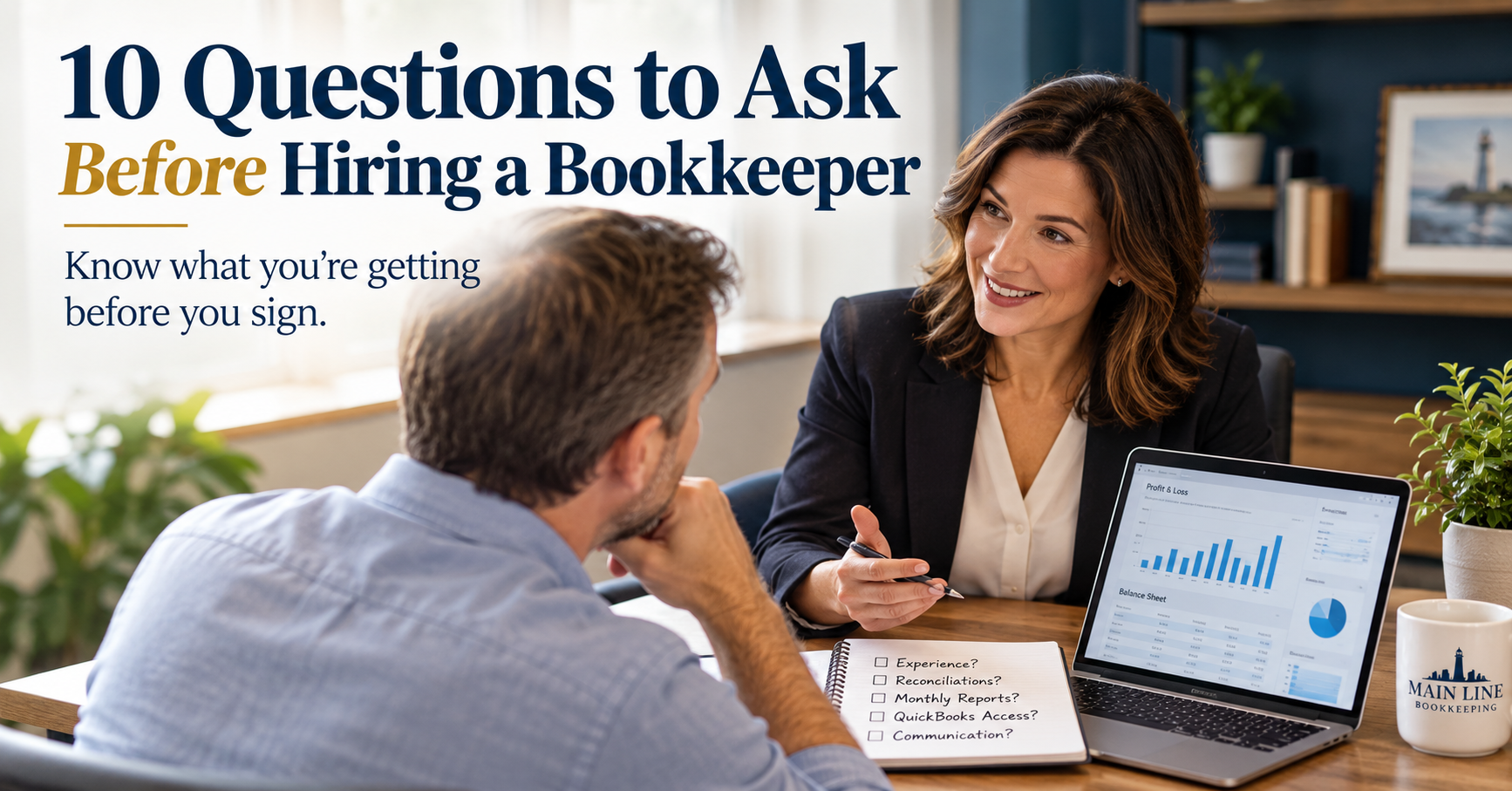
What Questions Should I Ask Before Hiring a Bookkeeper?
Quick answer: Before hiring a bookkeeper, don’t just ask what they charge. Find out who will actually work on your books, how often accounts are reconciled, what you’ll receive each month, how questions and errors are handled, how your financial information is protected, and whether they understand your type of business.
The right questions to ask before hiring a bookkeeper go beyond price. A good bookkeeping relationship should give you more than entered transactions. It should give you confidence that your books are complete, current, and useful.
10 Questions to Ask Before Hiring a Bookkeeper
1. Who will actually be working on my books?
The person selling the service isn’t necessarily the person doing the bookkeeping.
Ask whether you’ll have a dedicated bookkeeper, whether any of the work is outsourced, and who you’ll contact when you have a question.
You should know who is responsible for your books before you hand over access to them.
2. What bookkeeping systems do you work with?
If your business uses QuickBooks Online, QuickBooks Enterprise, payroll integrations, job costing, or other connected systems, find out whether the bookkeeper actually has experience working with them.
Knowing bookkeeping and knowing how to make your accounting system work properly aren’t always the same thing.
3. How often will my accounts be reconciled?
This is a big one.
Your bank and credit-card accounts should generally be reconciled at least monthly, against the actual bank and credit-card statements—not simply categorized from the bank feed and assumed to be correct.
Ask what their reconciliation process looks like, when reconciliations are completed, and how discrepancies are handled.
If you’re comparing two bookkeeping proposals, this is worth getting specific about. “We keep your QuickBooks updated” isn’t the same thing as completing and reviewing monthly reconciliations.
4. What will I receive from you every month?
Don’t settle for, “We’ll keep your QuickBooks updated.”
Ask specifically what you’ll receive and when you’ll receive it.
At a minimum, you should know whether you’ll receive a monthly Profit & Loss Statement and Balance Sheet, and by what day each month you can expect them.
Depending on your business, you may also need cash flow reporting, accounts receivable or accounts payable reports, job-costing information, or other management reports.
And ask one more question: Will someone help me understand anything unusual in those reports? Receiving financial statements and understanding what they’re telling you are two different things.
5. What happens when you find something that doesn’t make sense?
Every business has unusual transactions.
Ask whether questionable items are guessed at, dumped into a miscellaneous account, or brought to your attention.
You want a process for resolving questions—not merely getting them off somebody’s to-do list.
6. Do you have experience with businesses like mine?
Industry knowledge can matter.
A construction company using job costing, a landscape company carrying plant inventory, and a professional practice don’t necessarily need identical bookkeeping systems.
Your bookkeeper doesn’t have to know everything about your industry on Day One. But they should understand what makes your financial picture different—or know enough to ask the right questions.
7. What happens if my current books are a mess?
This question can reveal a lot.
Ask whether the bookkeeper performs cleanup work, how they determine what’s wrong, and whether cleanup is included in ongoing service or treated as a separate project.
Messy books happen. The important question is whether there’s a sensible process for getting them right.
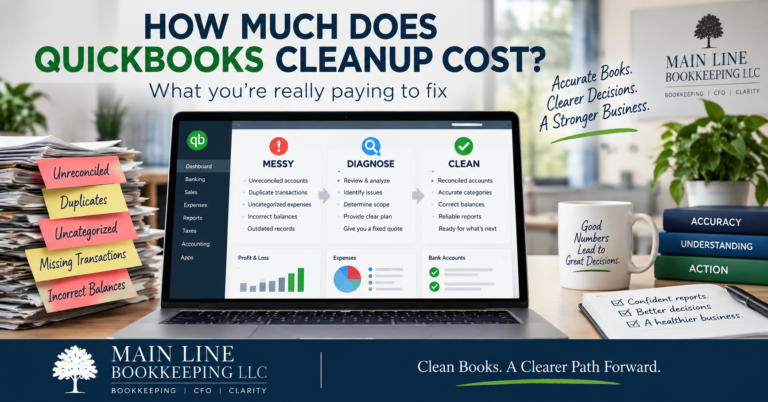
Related Answer Desk: How Much Does QuickBooks Cleanup Cost in 2026?
8. How will we exchange documents and communicate?
Ask how receipts, statements, bills, payroll information, questions, and approvals will move between you.
Also ask how often you’ll communicate and what happens when either side needs something from the other.
A remote bookkeeping relationship can work extremely well—but only when everybody understands who does what, when they do it, and where the information goes.
Related Answer Desk: How Does a Remote Bookkeeper or CFO Actually Work With Your Business?
9. How do you protect my financial information—and who owns my QuickBooks account?
Your bookkeeper may have access to some of the most sensitive information in your company, so ask how passwords, permissions, and financial data are protected.
But there’s another question that’s easy to overlook:
Who owns the QuickBooks subscription and company file?
Make sure your business retains control of its accounting records and understands exactly what happens to that access if the bookkeeping relationship ends.
If a bookkeeper provides QuickBooks through their own discounted subscription or billing arrangement, ask how ownership, administrator access, billing, and transfer of the company are handled before you sign up.
You don’t want to discover during a transition that accessing your own accounting records depends on the person you’re leaving.
Also ask whether the bookkeeper uses individual user access where available rather than sharing passwords. QuickBooks Online allows businesses to assign individual users specific roles and permissions, so access can be controlled without simply handing over the primary account credentials.
Ask how access is removed when someone no longer needs it, and whether the bookkeeping firm carries professional liability insurance.
The basic principle is simple: your financial records belong to your business, and you should always know how to access and control them.
10. Will you explain my numbers—or just send me reports?
This may be one of the most important questions to ask.
There is nothing inherently wrong with hiring someone strictly to maintain accurate books. Some businesses need exactly that.
But if you expect help understanding cash flow, profitability, margins, forecasts, hiring decisions, or other business questions, establish that expectation before you hire.
Bookkeeping and CFO-level financial guidance are related—but they aren’t the same service.
Related Answer Desk: Should I Hire a Bookkeeper or a CFO for My Growing Business?
What About Price?
Of all the questions to ask before hiring a bookkeeper, price is obviously going to be one of them. But price makes much more sense after you understand what you’re buying.
But price makes much more sense after you understand what you’re buying.
Two bookkeeping proposals can have very different prices because they include very different levels of reconciliation, reporting, cleanup, communication, transaction volume, complexity, and advisory support.
The cheapest quote isn’t automatically the wrong choice—and the most expensive isn’t automatically the best.
Compare the work, responsibility, and deliverables, not just the monthly number.
If you’re specifically dealing with books that need to be corrected before normal monthly bookkeeping can begin, see How Much Does QuickBooks Cleanup Cost in 2026?
Before You Hire a Bookkeeper
Keep these questions to ask before hiring a bookkeeper handy when you’re comparing proposals. A good interview should leave you knowing:
These questions to ask before hiring a bookkeeper can also help when you’re comparing two or three proposals side by side.
A good interview should leave you knowing:
A good interview should leave you knowing:
- Who is responsible for your books
- What work will be performed
- How often your accounts will be reconciled
- When the work will be completed
- What financial reports you’ll receive
- When you’ll receive those reports
- How questions and unusual transactions will be handled
- Who controls your accounting records and QuickBooks access
- What happens if the relationship ends
If those answers are fuzzy before you hire someone, they’re unlikely to become clearer afterward.
Not Sure How Much Bookkeeping Help You Need?
If you’re thinking about hiring a bookkeeper but aren’t sure how much help your business actually needs, start with our Business Financial Health Assessment.
It’s a quick way to look at where your bookkeeping and financial systems stand today—and where you may want some help.
Take the Business Financial Health Assessment →
Want to Go Deeper?
Choosing the right bookkeeper is one part of the equation. The other is knowing whether the financial information you’re receiving can actually be trusted.
That’s something we explore in more detail in Project Lighthouse.
Can I Trust My QuickBooks Numbers?
It walks through warning signs that the numbers you’re using to run your business may need a closer look—and what those warning signs may be telling you.
Still not sure what kind of financial help your business needs?
Main Line Bookkeeping provides monthly bookkeeping and reporting, QuickBooks cleanup and system setup, and CFO-level financial guidance for growing businesses.
We can help you figure out what your business actually needs before you commit to more than you need.

One Comment